

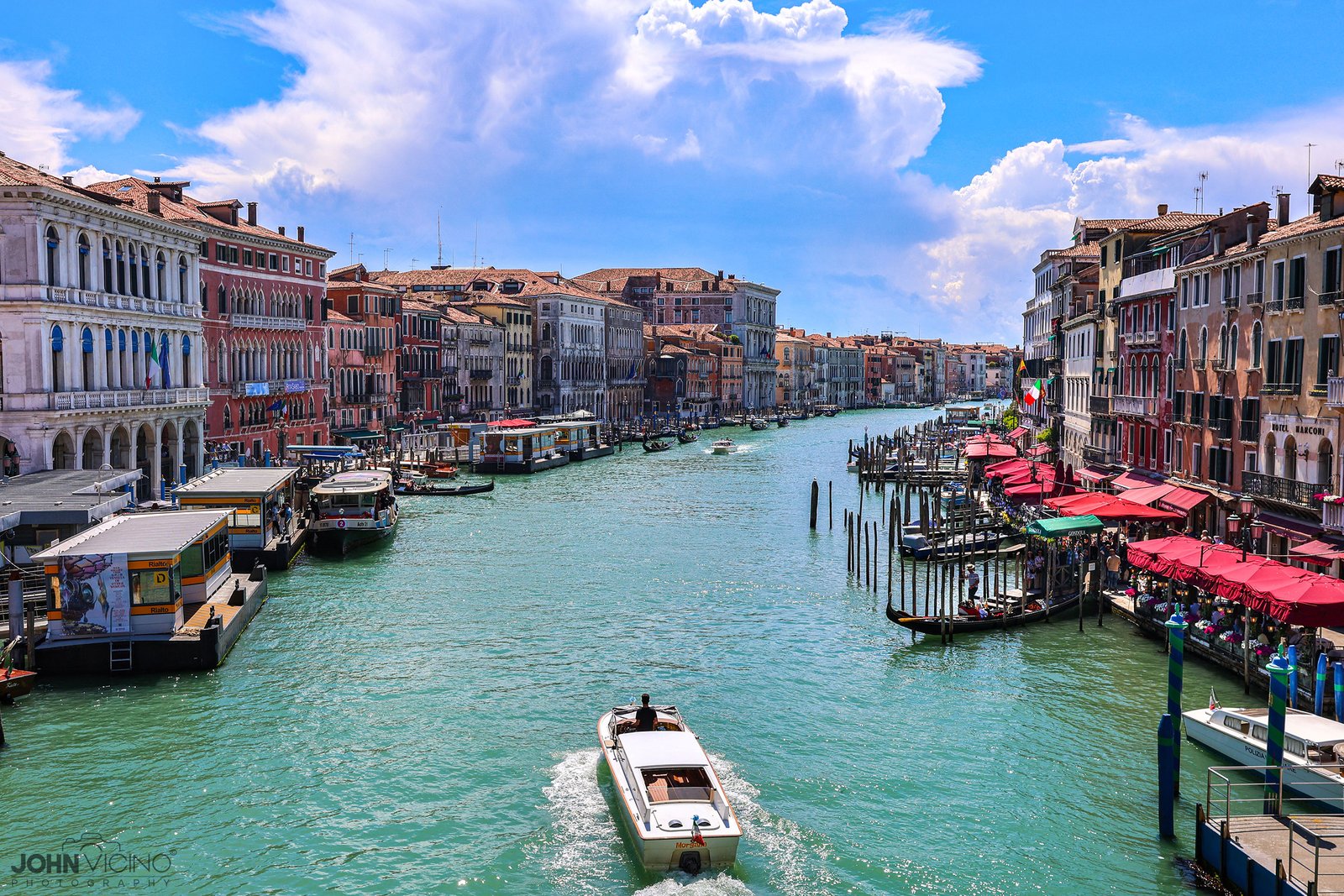
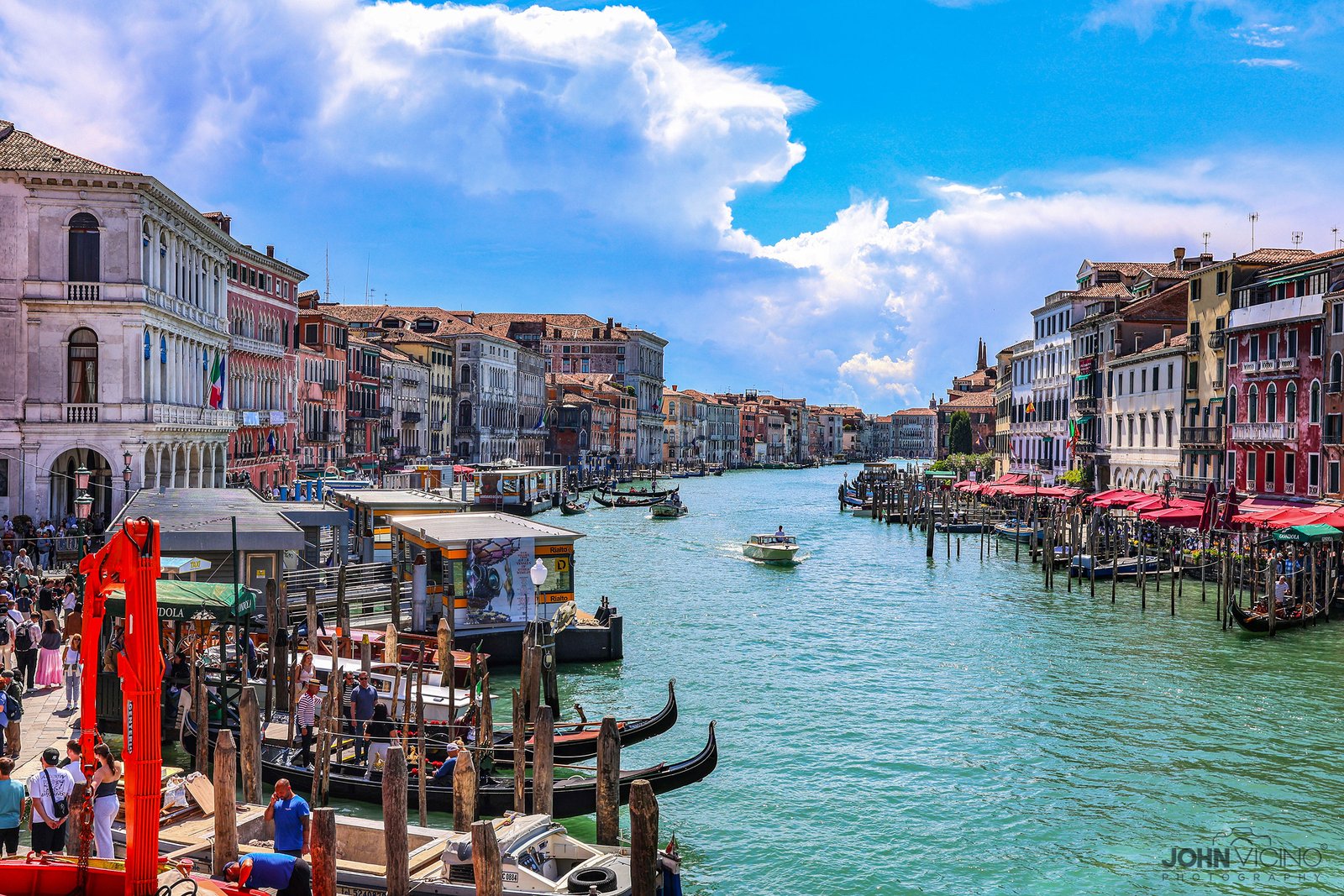
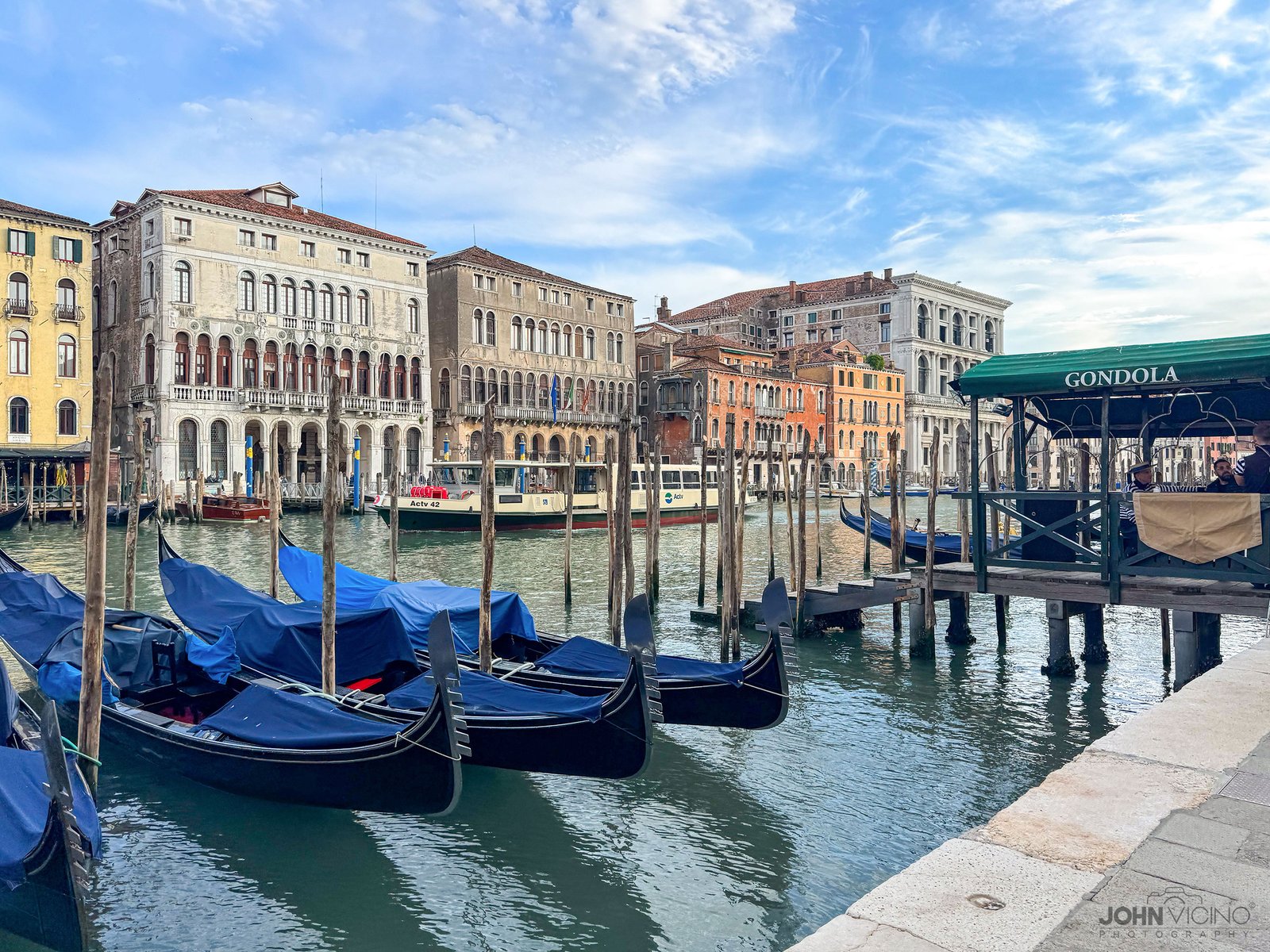
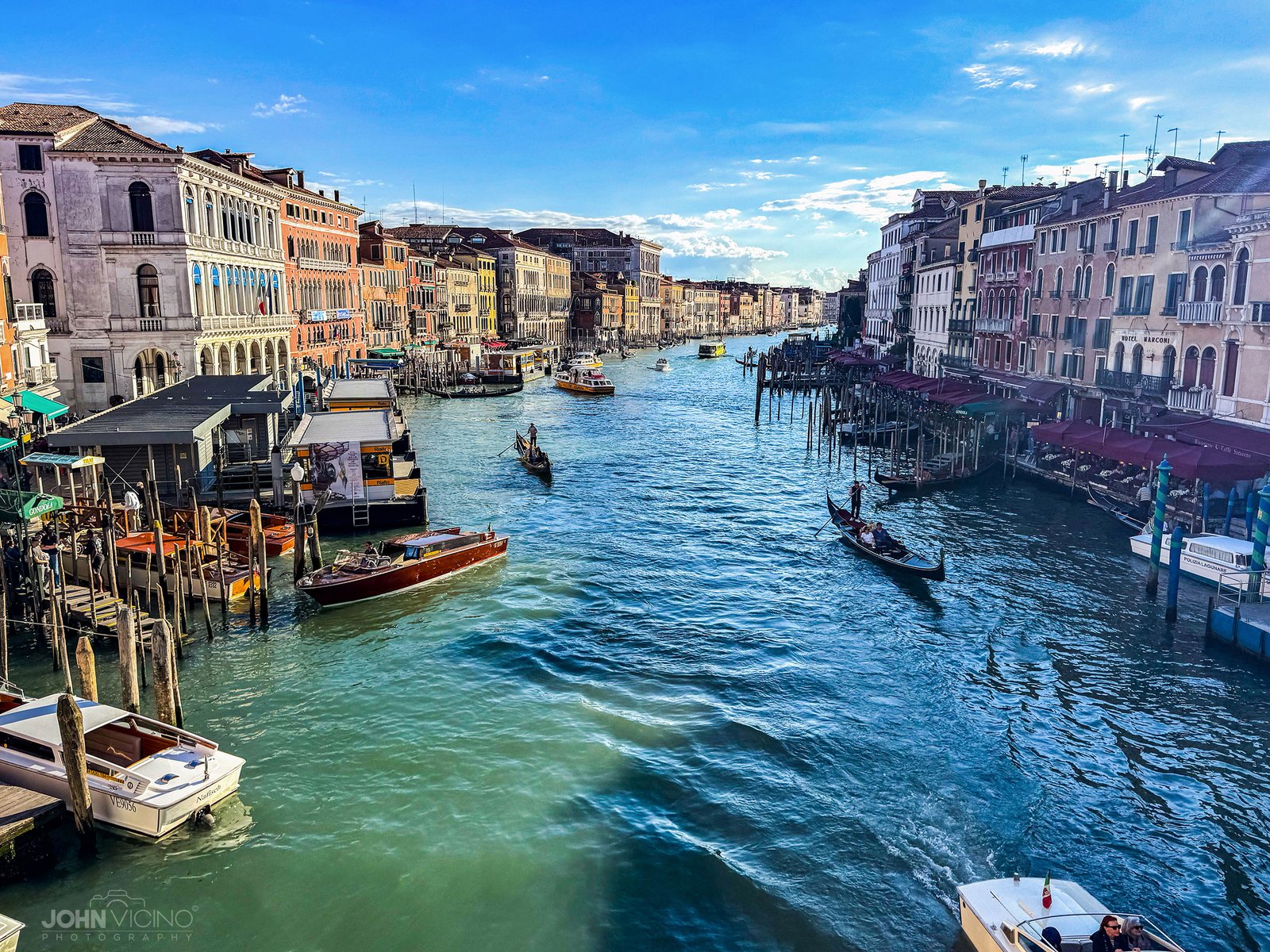
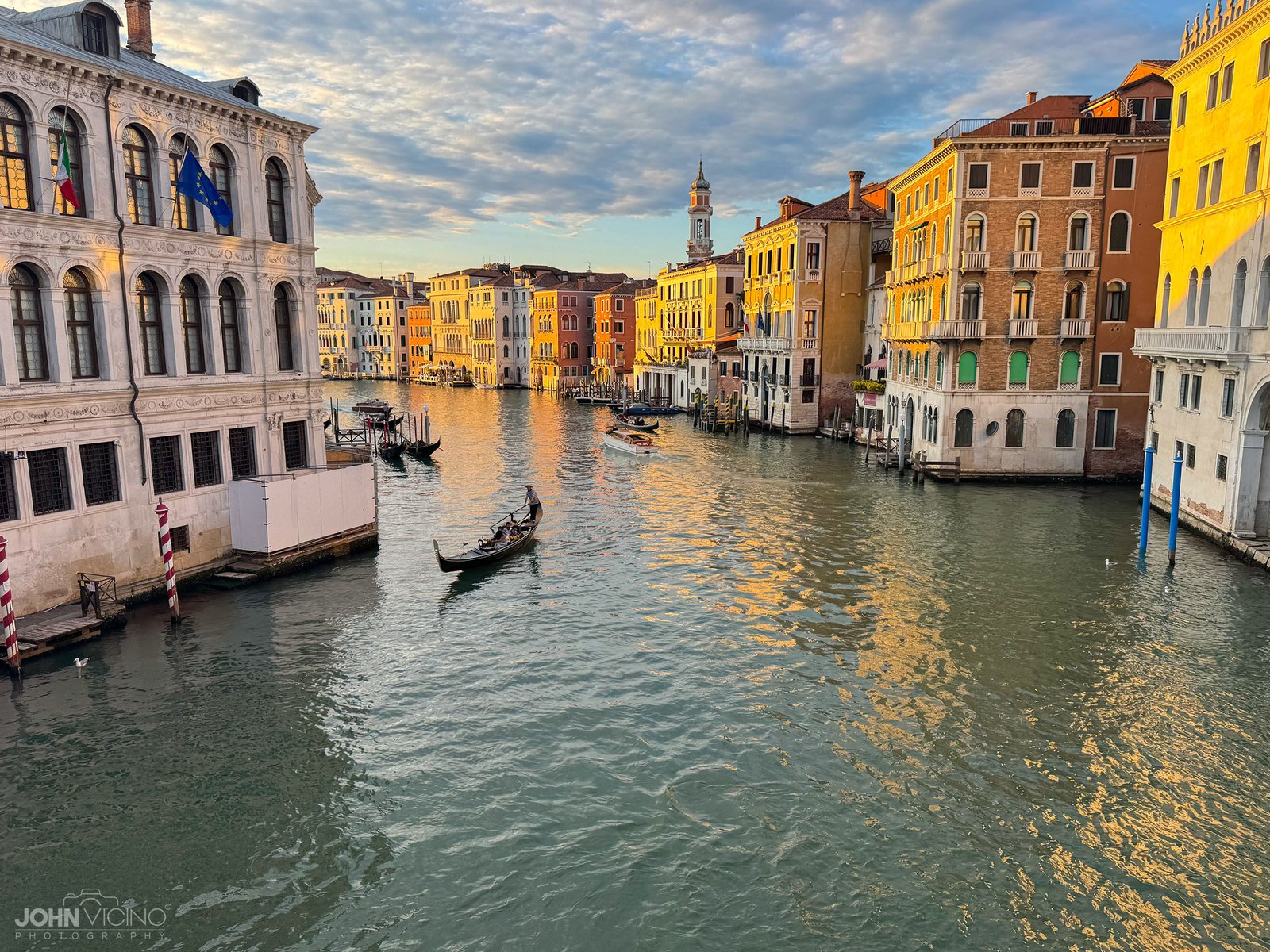
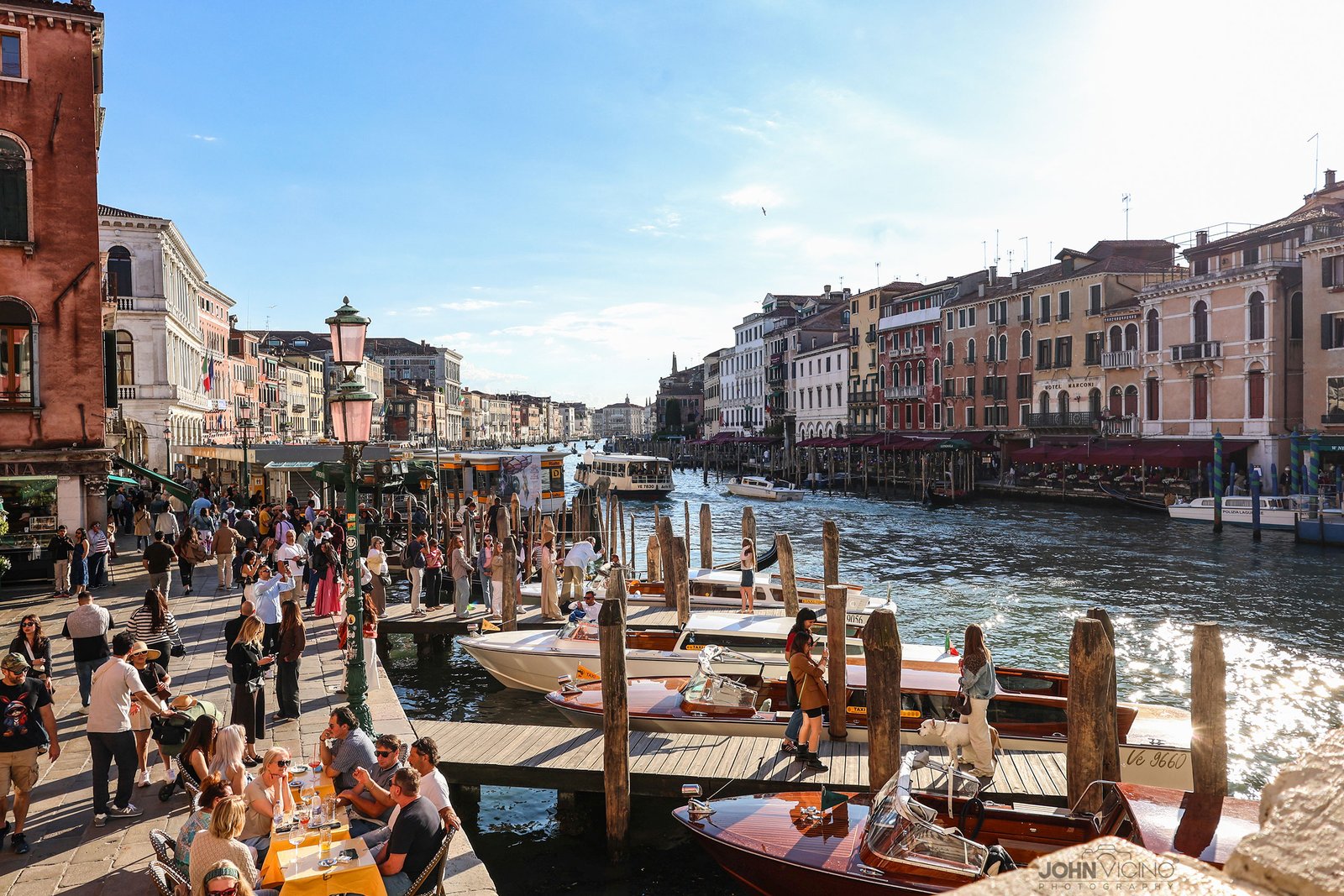
Venice does not simply sit beside the water. It exists because of it. Streets become canals, intersections become bridges, and boats take the place of nearly everything that would move on wheels elsewhere. The result is a city whose rhythm feels entirely its own—centuries-old palaces rising directly from the water while gondolas, water taxis and vaporetti move through the same corridors that have carried life through Venice for generations.
The Grand Canal reveals the city at its largest and most theatrical. Ornate façades line both banks like walls of an enormous outdoor gallery, their colors and architectural styles layered across centuries. Beneath them, the water is constantly alive. Boats cross wakes, gondolas wait along weathered wooden poles, crowds gather at the edges, and sunlight scatters across the canal as the city carries on around it.
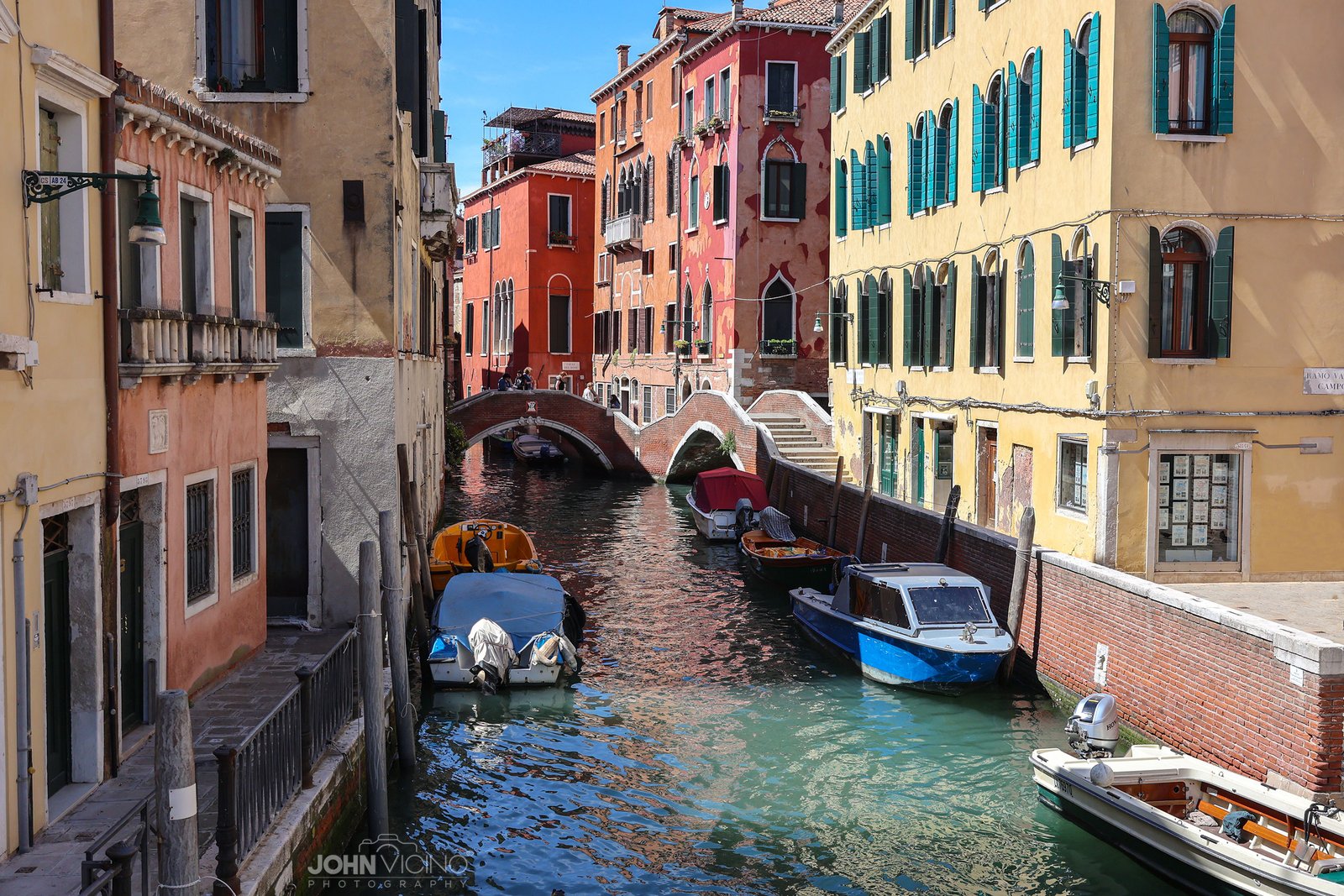
But beyond the grandeur are the smaller waterways, where Venice becomes more intimate. Narrow canals disappear between faded walls, modest boats rest beneath little brick bridges, and reflections borrow the colors of the buildings above them. These quieter passages reveal something essential about Venice: the water is not merely part of the scenery. It is the connective tissue of the city.
Few places have allowed geography to define their identity so completely. Venice turned the obstacle of water into its architecture, transportation, livelihood and ultimately its signature. What emerged is not simply a city surrounded by canals, but a city inseparable from them—a place where the water doesn’t interrupt the road.
Scenic Photography | Scenic Photos | Outdoor Photography | ©John J. Vicino